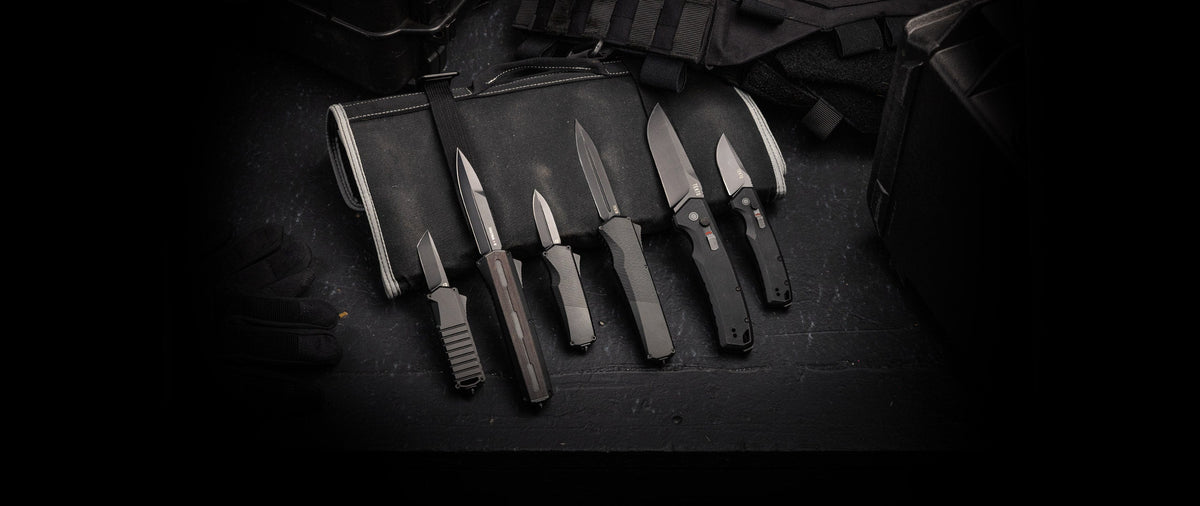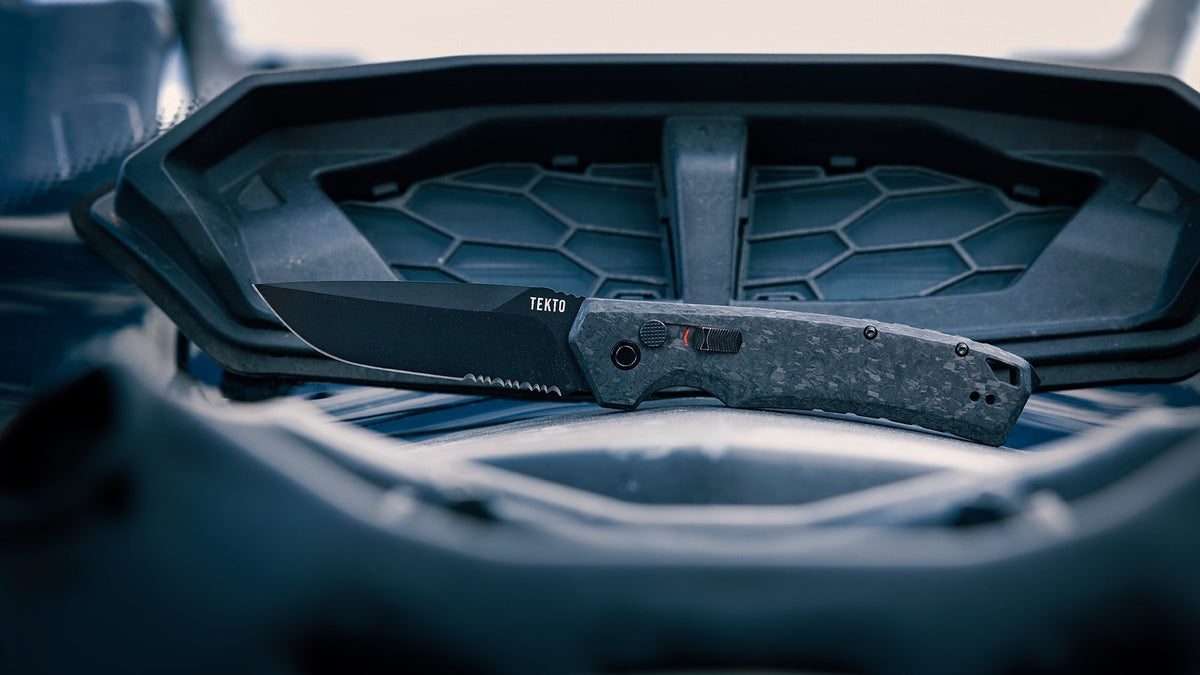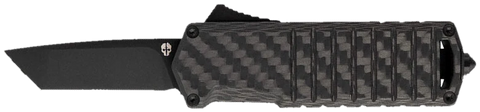


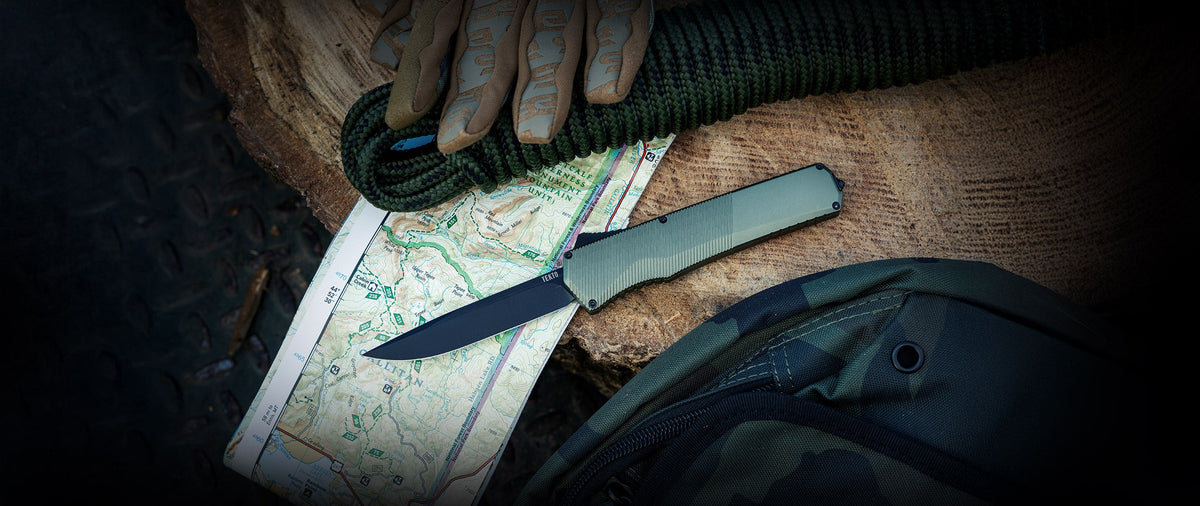
Most states set no blade length limit at all for an ordinary pocket knife. The ones that do draw the line in a few familiar places: 2 inches for an automatic in California, 3 inches concealed in Rhode Island, 3.5 inches concealed in Colorado, 4 inches in Connecticut. This page from TEKTO® puts all 50 states on one table, taken from our Knife Laws by State guide and the state pages behind it, so the two never disagree. Every state in the table links to its full page, with the statutes.
The Short Version
There is no national blade length limit. Most states let an adult carry a folding knife of any length, open or concealed, and 18 states set no blade length at all for carrying a knife in public, outside restricted places such as schools. Where a state does set a number, it usually applies to concealed carry, to automatics, or to people under 21. The numbers that come up most are 2 inches (automatics in California), 3 inches (concealed in Rhode Island), 3.5 inches (concealed in Colorado, and under 21 in Nebraska and West Virginia), 4 inches (Connecticut, and the pocketknife lines in Florida and Missouri), 5.5 inches (Texas) and 6 inches (Idaho and North Dakota). Cities can be stricter than their state, and five states bar automatic knives whatever the blade length: Minnesota, New Jersey, New Mexico, New York and Washington.
How to Read the Table
Each row gives the state's rule for four kinds of carry: a folding knife carried openly, a folding knife carried concealed, a fixed blade, and an automatic, meaning a switchblade or an OTF. The table covers an adult carrying a knife for ordinary reasons in public. It does not cover schools, courthouses, airports or federal buildings, which have their own rules in every state, and in every state carrying any knife to use it against someone is a crime at any length.
- No limit means state law sets no blade length for that knife carried that way. It does not mean a city cannot.
- A number is the longest blade the state allows. "Under 2 in" means a 1.99-inch blade is fine and a 2.00-inch blade is not. "3.5 in or less" includes 3.5.
- At 18 or at 21 means adults of that age may carry that way. Younger people may not.
- Open carry only or not concealed means the knife is legal on a belt or in plain view and illegal hidden.
- Banned means the state bars the automatic knife itself, at any blade length.
- Cities preempted means state law stops cities and counties from adding knife rules of their own.
- See state page marks the places where our state page says the answer turns on the facts, or on a city code we have not read, so a one-line answer would mislead.
Blade Length Limits in All 50 States
Tap a state for its full page. On a phone, the table scrolls sideways.
| State | Folding knife, open | Folding knife, concealed | Fixed blade | Automatic or OTF | Note |
|---|---|---|---|---|---|
| Alabama | No limit | No limit | No limit | No limit | No state line. Some cities may set their own, see state page. |
| Alaska | No limit | Ordinary pocket knife, no limit | Open any length, concealed at 21 | Open any length, concealed at 21 | Tell an officer about a concealed knife. Cities preempted. |
| Arizona | No limit | No limit | Open any length, concealed at 21 | No limit, an OTF concealed at 21 | Cities preempted. |
| Arkansas | No limit | No limit | No limit | No limit | The 3 in line matters only if you carry to use the knife unlawfully. |
| California | No limit | No limit, folded | Open carry only | Under 2 in | A folder locked open counts as a dirk. Los Angeles: no 3 in blade in plain view. |
| Colorado | No limit | 3.5 in or less | Open any length, concealed 3.5 in or less | Open any length, concealed 3.5 in or less | Denver bans automatics and concealed blades over 3.5 in. |
| Connecticut | Under 4 in | Under 4 in | Under 4 in, no dirks | 1.5 in or less | The 4 in rule counts the edged portion. Licensed hunters and anglers exempt. |
| Delaware | No limit | 3.75 in or less, carried closed | Open any length, concealed with a license | Open any length, concealed with a license | Under 18: no automatic and no blade over 3.75 in. |
| Florida | No limit | About 4 in, longer at 21 and eligible | Open any length, concealed at 21 and eligible | Open any length, concealed at 21 and eligible | The 4 in figure comes from court rulings and is not a bright line. |
| Georgia | 12 in or less | 12 in or less | 12 in or less | 12 in or less | Longer if you are eligible for a carry license. 2 in line in school safety zones. |
| Hawaii | No limit | No limit | No limit, dirks and daggers open only | Open carry only | Ordinary pocket, hunting, diving and kitchen knives carry open or concealed. |
| Idaho | No limit | 6 in or less, longer at 18 | 6 in or less concealed, longer at 18 | 6 in or less concealed, longer at 18 | 2.5 in line on K-12 school property. Cities preempted. |
| Illinois | No limit | No limit | No limit | No limit, with a FOID card | 3 in line in public buildings. Chicago bans automatics and concealed blades over 2.5 in. |
| Indiana | No limit | No limit | No limit | No limit | No state length or concealment rule for knives. |
| Iowa | No limit | No limit | No limit | No limit | The carry offense was repealed in 2021. Cities preempted. |
| Kansas | No limit | No limit | No limit | No limit | Cities preempted. |
| Kentucky | No limit | Ordinary pocket knife at any age, others at 21 | Open any length, concealed at 21 unless a hunting knife | Open any length, concealed at 21 | Lexington and Louisville have their own ordinances. |
| Louisiana | No limit | No limit at 18 | Open any length, concealed at 18 | Open any length, concealed at 18 | Cities preempted since 2024. |
| Maine | No limit | No limit | Open any length, no concealed bowie, dirk or stiletto | No limit | Hunting, fishing and trapping knives are exempt from the concealment rule. |
| Maryland | No limit | No limit | Open any length, no concealed dirk or bowie | Open any length, not concealed | Sale barred statewide. Baltimore City bans automatics. |
| Massachusetts | No limit | No limit | No limit, single edge only | No carry limit, sale over 1.5 in barred | Double-edged blades and daggers barred. Boston: 2.5 in. |
| Michigan | No limit | No limit | No limit, single edge | No limit, single edge | Daggers and double-edged blades: never concealed or in a car. Detroit and Lansing have their own rules. |
| Minnesota | No limit | No limit | No limit | Banned | Minneapolis and St. Paul are reported to set 4 in folder lines, see state page. |
| Mississippi | No limit | No limit | Open any length, no concealed bowie, dirk or butcher knife | Open any length, not concealed | A sheath that shows at all counts as open carry. |
| Missouri | No limit | No limit | No limit | No limit | A 4 in pocketknife line applies in schools, government buildings and other listed places, see state page. |
| Montana | No limit | No limit | No limit | No limit | 4 in line inside school buildings. Cities preempted. |
| Nebraska | No limit | No limit at 21, 3.5 in or less under 21 | No limit at 21, concealed 3.5 in or less under 21 | No limit at 21, concealed 3.5 in or less under 21 | Lincoln and Omaha bar knives on city property. |
| Nevada | No limit | No state limit, under 3 in in Clark County | Open any length, concealed: see state page | No limit | Unincorporated Clark County, the Las Vegas Strip included, bars concealed blades of 3 in or more. |
| New Hampshire | No limit | No limit | No limit | No limit | Cities preempted. |
| New Jersey | No limit, lawful purpose | No limit, lawful purpose | Single edge, lawful purpose | Banned | Self-defense does not count as a lawful purpose. |
| New Mexico | No limit | No limit | Open any length, concealed: see state page | Banned | Daggers, dirks and bowie knives concealed only in your car or at home. |
| New York | No limit | No limit | No limit | Banned | New York City: no blade of 4 in or more in public, and no knife in open view. |
| North Carolina | No limit | Ordinary pocket knife, closed | Open any length, not concealed | Open any length, not concealed | No length lines. Assisted openers may not be concealed either. |
| North Dakota | No limit | Under 6 in | Open any length, concealed under 6 in, no daggers | Open any length, concealed with a license | A belt sheath that is visible counts as open carry. |
| Ohio | No limit | No limit | No limit | No limit | Concealment is an offense only for a knife carried to use against someone. Cities preempted. |
| Oklahoma | No limit | No limit | No limit | No limit | Cities preempted. |
| Oregon | No limit | No limit | Open any length, no concealed dirk or dagger | Open any length, not concealed | Portland parks bar automatics and blades over 3.5 in. |
| Pennsylvania | No limit | No limit | No limit | No limit | Philadelphia's ban cannot be enforced. No automatics in court facilities. |
| Rhode Island | No limit | 3 in or less | Open any length, concealed 3 in or less, no daggers or bowies | Open any length, concealed 3 in or less | Measured from the end of the handle where the blade attaches. |
| South Carolina | No limit | No limit | No limit | No limit | Over 2 in barred on K-12 school property. |
| South Dakota | No limit | No limit | No limit | No limit | Rapid City is reported to bar concealed blades over 3 in. Sioux Falls bars concealed daggers, dirks and bowies. |
| Tennessee | No limit | No limit | No limit | No limit | Cities preempted. |
| Texas | 5.5 in anywhere, longer with place limits | 5.5 in anywhere, longer with place limits | 5.5 in anywhere, longer with place limits | 5.5 in anywhere, longer with place limits | Under 18, over 5.5 in only at home, in their own car or with a parent. Cities preempted. |
| Utah | No limit | No limit | No limit | No limit | Under 18, carry with a parent's permission. Cities preempted. |
| Vermont | No limit | No limit | No limit | No limit | No carry rules at 16 and older. Switchblade ban repealed in 2025. |
| Virginia | No limit | No limit | Open any length, no concealed dirk, bowie or dagger | No limit | School property: only a folding blade under 3 in. |
| Washington | No limit | No limit | Open any length, not concealed | Banned | Seattle bars fixed blades and any blade over 3.5 in. |
| West Virginia | No limit at 18 | 3.5 in or less, longer at 21 | Open at 18, concealed at 21 | Open at 18, concealed at 21 | Under 18: no blade over 3.5 in and no automatic. Cities preempted. |
| Wisconsin | No limit | No limit | No limit | No limit | Cities preempted. |
| Wyoming | No limit | No limit | No limit | No limit | Cities preempted. |
What "Blade Length" Means and How It Is Measured
Most knife statutes give a number and never say where the ruler goes. Three approaches show up across our state pages. Rhode Island writes it into the law: its 3 inches is measured "from the end of the handle where the blade is attached to the end of the blade." Connecticut's 4-inch rule counts only "the edged portion of the blade," so an unsharpened section near the handle does not count toward it, though its 1.5-inch line for automatics refers to the whole blade. Everywhere else, the safe reading is the longest one, the one an officer with a tape measure would use: from the tip to the point where the blade meets the handle, with the blade fully open, sharpened or not. On an OTF that means the steel that shows when the blade is out.
The wording around the number matters as much as the number. California bars an automatic with a blade of "two or more inches," so 2.00 is over the line and the legal size is anything under it. Colorado restricts a concealed blade "over three and one-half inches," so 3.5 is legal. North Dakota's line is "six inches or more," and Missouri's pocketknife line is "no blade more than four inches." Where a knife is close to a line, measure it yourself and leave margin. Our California-legal OTF guide shows the measurement with a diagram.
Cities With Their Own Lines
A state number is not the last word everywhere. These are the city rules our state pages name, and the state page has the details and the exceptions.
- Los Angeles: no knife with a blade of 3 inches or more carried in plain view in public, with exceptions for work, recreation and travel to and from them. See California.
- Denver: bans automatic knives and concealed blades over 3.5 inches. Boulder has its own code. See Colorado.
- Chicago: bans automatic knives, with no FOID card exception, and concealed blades over 2.5 inches. See Illinois.
- Boston: no blade over 2.5 inches, with exceptions for work, hunting, fishing, recreation and cooking. See Massachusetts.
- New York City: no blade of 4 inches or more in public, and no knife carried in open view, which has included a visible pocket clip. See New York.
- Seattle: no fixed blade and no blade over 3.5 inches, open or concealed, with narrow exceptions. See Washington.
- Las Vegas Strip and unincorporated Clark County: no concealed blade of 3 inches or more without the sheriff's written permission. See Nevada.
- Baltimore City: bans carrying or owning an automatic knife. See Maryland.
- Portland: automatics and blades over 3.5 inches are barred in city parks. See Oregon.
- Minneapolis and St. Paul: both are reported to restrict folding knives over 4 inches, from secondary sources. See Minnesota.
- Rapid City: reported to bar concealed blades over 3 inches. See South Dakota.
Our pages also mention city ordinances in Alabama (Montgomery, Birmingham and Mobile), Kentucky (Lexington and Louisville), Michigan (Detroit and Lansing), North Dakota (Bismarck, Fargo and Grand Forks), South Dakota (Sioux Falls, Aberdeen and Sturgis) and California (San Francisco and Oakland), and Lincoln and Omaha in Nebraska bar knives on city property. Read the state page before you carry there. In the states marked "Cities preempted" in the table, no city may add a knife rule at all.
Carrying Across State Lines
Each state's law applies while you are in it, and no federal law lets you carry a knife through a state where it is restricted. The practical rule is that the strictest state on the route decides what you bring. Driving from Pennsylvania to New York with an OTF in your pocket takes you from a state with no limit to one where owning it is a crime. A 3.5-inch folder in your pocket is legal in Colorado and over the concealed line in Rhode Island.
When a knife is restricted somewhere on the way, keep it out of reach, ideally locked in the trunk. That is not enough everywhere: Michigan's ban on daggers and double-edged blades reaches "any vehicle," trunk included, and California's switchblade ban covers the passenger area of a car. Our guide to traveling with a knife covers driving, flying, national parks and Canada.
Which TEKTO Knives Fit Under 2, 3, 3.5 and 4 Inches
These are the published blade lengths from our product pages, measured from the tip to where the blade meets the handle.
- Under 2 inches: the A2 Badger and the A5 Spry Mini, both double-action OTFs with 1.85-inch blades. Both are legal to carry in California, and both are under Boston's 2.5-inch line. Neither is under Connecticut's 1.5-inch line for automatics.
- 3 inches: only the two minis. The F1 Alpha, our shortest folder at 3.10 inches, is just over Rhode Island's concealed line.
- 3.5 inches: the F1 Alpha (3.10 inches), the F2 Bravo (3.30), the X1 Atlas fixed blade (3.30) and the F4 Echo (3.40) are all under it. The A5 Spry measures exactly 3.50 inches, inside a "3.5 inches or less" rule like Colorado's with no margin to spare. The A3 Delta and A7 Zastava (3.60) and the F3 Charlie (3.80) are over.
- 4 inches: every TEKTO knife. The longest, the F3 Charlie at 3.80 inches, is under Connecticut's 4-inch rule, New York City's 4-inch line and the 4-inch pocketknife lines in Florida and Missouri.
Length is only half the question for an automatic. In the five states that bar them, and in Denver, Chicago and Baltimore City, a TEKTO automatic is off limits however short the blade. In the states that restrict concealment, the manual folders and the X1 Atlas are the ones to carry. Our Knife Laws by State guide has the rest of each state's rules.
This page summarizes state and city knife laws for general information and is not legal advice. Laws change, and enforcement varies by officer, prosecutor and court. For your own situation, read the statute or talk to a lawyer in your state.
Knives Under the Common Lines
Two OTFs under 2 inches, and two manual folders under 3.5 inches.
-
-


A5 Spry Mini
Regular price $179.99Regular priceUnit price per -
-


People Are Asking
What is the legal blade length for a pocket knife?
There is no national limit, and most states set none for a folding knife. Where a state does set one, the common lines are 2 inches for an automatic in California, 3 inches concealed in Rhode Island, 3.5 inches concealed in Colorado and 4 inches in Connecticut. Cities can be stricter than their state.
Is a 3-inch knife legal everywhere?
Under state law, a manual folding knife with a 3-inch blade is legal to carry in every state, in New Jersey only for a lawful purpose such as work or recreation. Cities are where it can fail: Boston draws its line at 2.5 inches, Chicago bars a concealed blade over 2.5 inches, and Los Angeles bars a 3-inch blade in plain view.
How do you measure knife blade length?
From the tip to the point where the blade meets the handle, with the blade fully open, counting any unsharpened section. Most statutes do not say, so that longest reading is the safe one. Rhode Island writes it into the law, and Connecticut's 4-inch rule counts only the sharpened edge.
What states have no knife length limit?
Alabama, Arkansas, Indiana, Iowa, Kansas, Missouri, Montana, New Hampshire, Ohio, Oklahoma, Pennsylvania, South Carolina, South Dakota, Tennessee, Utah, Vermont, Wisconsin and Wyoming set no blade length for carrying a knife in public, outside restricted places such as schools. Many other states have no limit for open carry or for a folding knife.
Is a 4-inch knife legal to carry?
In most states, yes, open or concealed. Connecticut bars a knife whose edge is 4 inches or more, Colorado and Rhode Island bar concealing one, Delaware requires a license to conceal a folder over 3.75 inches, and New York City bars 4 inches or more in public. Check the state page before you carry.
Do cities have their own knife length limits?
Some do. Los Angeles bars a blade of 3 inches or more in plain view, Boston sets 2.5 inches, Chicago bars concealed blades over 2.5 inches, New York City bars 4 inches or more, Seattle bars blades over 3.5 inches, and unincorporated Clark County in Nevada bars concealed blades of 3 inches or more. Many states stop cities from adding knife rules at all.