

Any knife that sells well gets copied, and out-the-front automatics get copied more than anything else in the knife world. A fake can look right in a listing photo and still fail the first time you depend on it: a lock that slips, a blade that will not stay out, steel that chips on cardboard. This guide from TEKTO® shows how to spot a counterfeit or a knockoff before you buy one, what to check once a knife is in your hand, and why the warranty on a real knife only covers the real thing.
The Short Version
Buy from the maker or an authorized dealer, and be suspicious of any price far below what the brand and its dealers charge. Check who is actually selling the knife, not just the brand name on the listing. When the knife arrives, look at the packaging, the markings, the grind and the finish, weigh it against the published spec, and work the action and the lock. A genuine TEKTO is covered for life by the TEKTO lifetime warranty, whoever owns it. A counterfeit is not covered at all.
Why Knives Get Copied
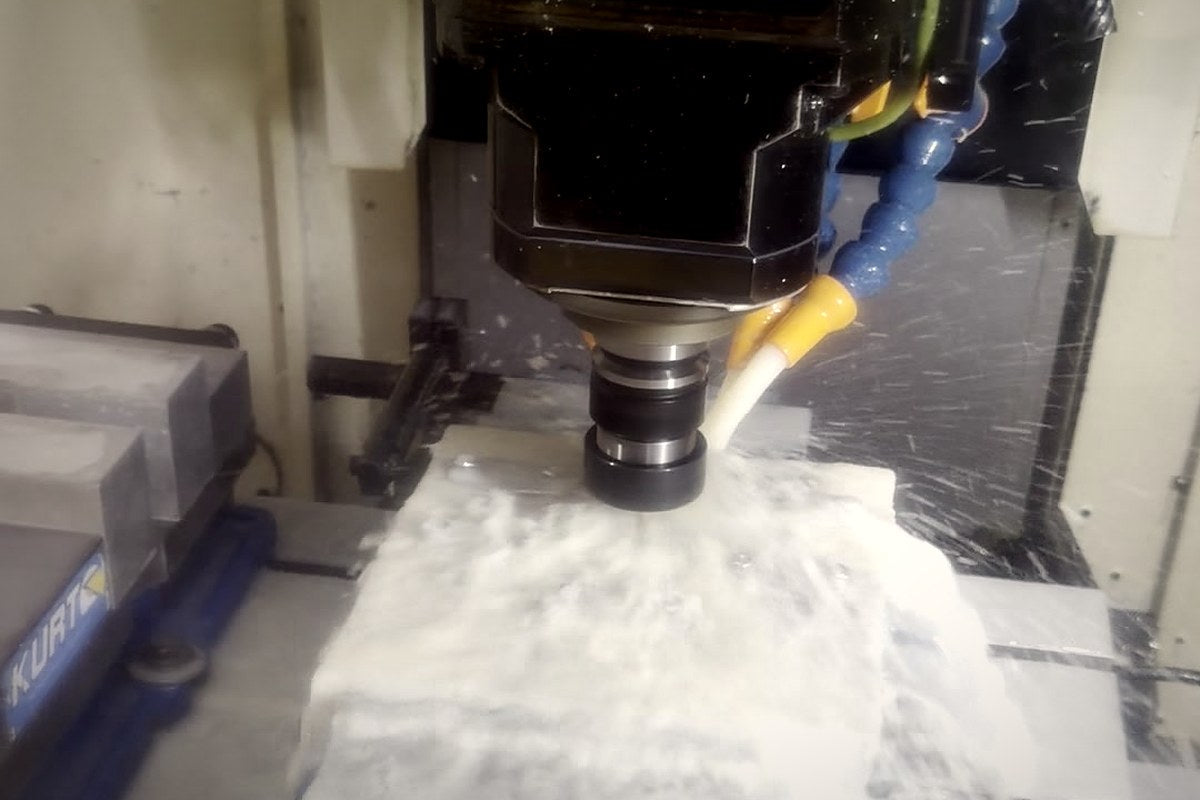
A good knife is expensive to make for reasons that do not show up in a photograph: the steel, the heat treatment, the machining tolerances, the springs in an automatic and the hours of fitting and testing. A copy can match the outline and the color for a fraction of the cost by skipping all of that. Automatics are the most copied knives because their price is higher, their mechanism is hidden inside the handle, and a buyer cannot test the action from a listing. The copies are sold on marketplaces, auction sites, social media ads and at flea markets, often with the original's name, photos and specs pasted into the description.
The Price Tells You First
The fastest tell is a price that is too good. Brands and their authorized dealers sell new knives at or near the same price, so a new knife listed at half of what everyone else charges is almost never a bargain. It is a copy, a used or damaged knife sold as new, or a listing that will never ship. Know the real price before you shop. Every TEKTO knife is listed with its price on tektoknives.com, from the F1 Alpha at $119.99 to the bronze A5 Spry at $299.99, and our guide to what an OTF knife costs explains what the money buys at each level.
Check the Seller, Not the Listing
On a marketplace, the brand name in the title tells you nothing about who made the knife. Look for the seller's name and check it against the maker's own list of dealers. TEKTO knives are sold on tektoknives.com and by more than 500 retailers across the country, and you can find the ones near you on our store locator. A seller you cannot find there, with no history, stock photos only and a ship-from address overseas, is the profile of a counterfeit listing. Buying from tektoknives.com or an authorized dealer is the surest way to know the knife is ours.
Packaging and Paperwork
Counterfeiters spend the least on what you see last. Look for misspelled brand or model names, blurry or crooked printing, a generic box with a sticker on it, and anything the real knife comes with that is missing, such as a pouch with a folder or a sheath with a fixed blade. A real knife's box, markings and model name match each other and match the maker's website. If the listing photos show one package and a different one arrives, treat that as an answer.
Steel, Grind and Finish
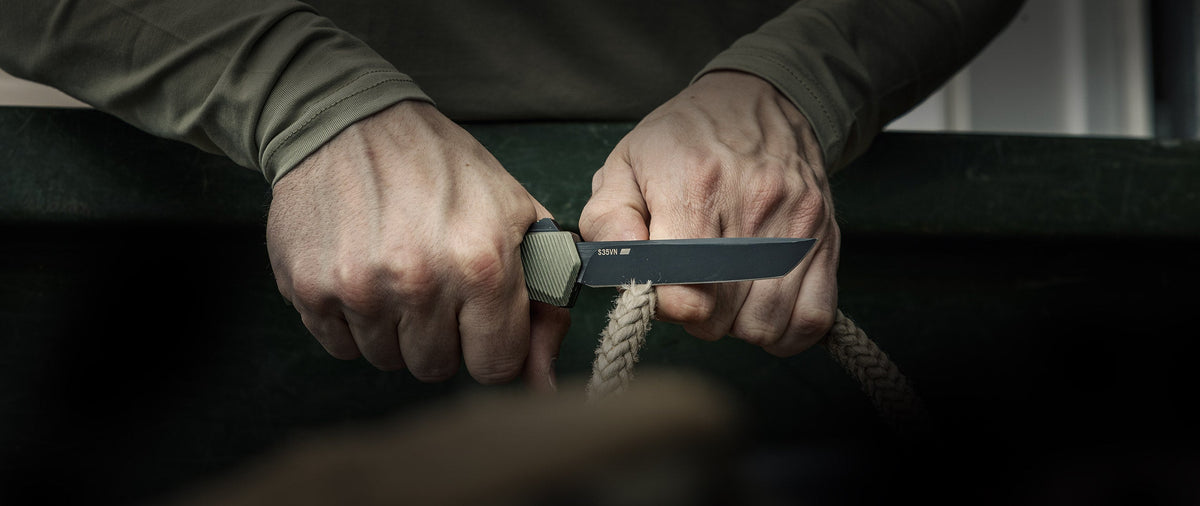
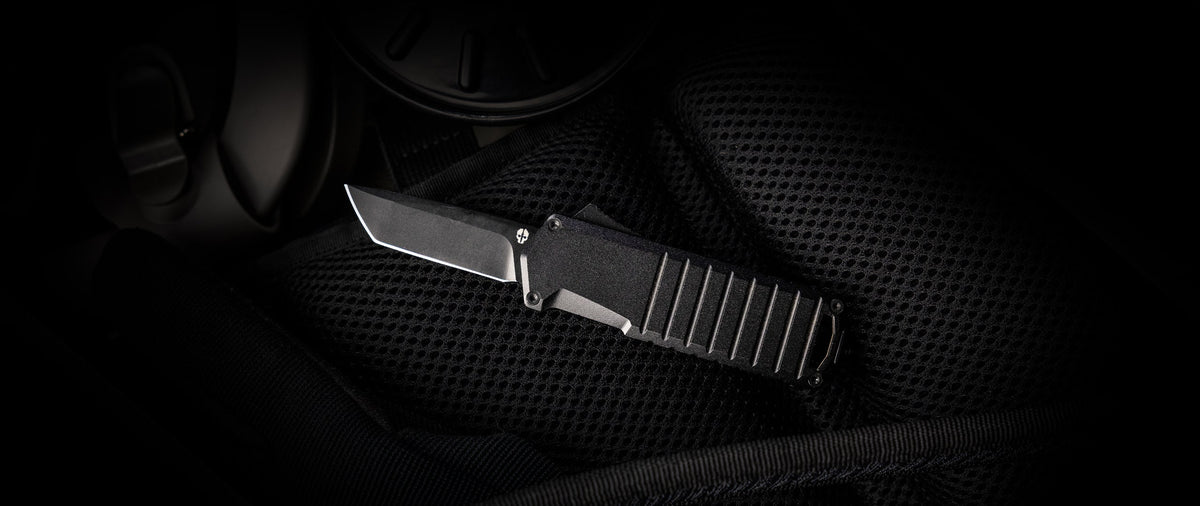
Look closely at the blade. A genuine knife has clean, even grind lines that meet the edge at the same height on both sides, a crisp tip, and a coating that covers evenly without bubbles, thin spots or chips along the spine. The logo and markings are sharp and straight. A copy often has wavy grind lines, an edge that is ground higher on one side, a rounded or uneven tip, and a coating that flakes at the corners after a week. Copies also lie about steel. A listing that names a premium steel and sells for a fraction of the price is not using that steel, and a blade marked only "stainless" with no grade is telling you nothing. Our blade steel guide explains what D2, S35VN and MagnaCut actually do.
Action, Lock and Fit
This is where a knockoff stops being a cosmetic problem. On an out-the-front automatic, a genuine knife fires the blade fully out and locks it with authority, retracts it fully, and has very little play in the blade when it is open. A copy misfires, stops short, wobbles side to side or up and down when open, or needs a second push to lock. On a folder, the lock should engage cleanly and hold with no rock when you press on the spine, the blade should center in the handle when closed, and the pivot should turn smoothly without grit. Handles should meet with no gaps, screws should sit flush, and the pocket clip should hold without bending. Any knife that fails these checks is not safe to rely on, whatever name is on it.
Weigh It and Measure It
Makers publish their specs, and counterfeiters rarely match them. A kitchen scale and a ruler settle a lot of questions. The A2 Badger has a 1.85-inch blade and weighs 2.18 ounces, the A5 Spry has a 3.50-inch blade and weighs 3.49 ounces, and the F3 Charlie has a 3.80-inch blade and weighs 4.50 ounces, and every TEKTO product page lists the blade length, handle length and weight. A knife that comes in well under the published weight is usually using cheaper materials, and one with the wrong blade length is not the model it claims to be.
Cheap Is Not the Same as Fake
An honest inexpensive knife sold under its own name is not a counterfeit. It is a budget knife, and it may be the right choice for a toolbox or a glove compartment. The problem is a knife that pretends to be something it is not, borrowing another maker's name, design or specs, or a knife sold on claims it does not meet. Judge a budget knife by what it says about itself. If the steel, the lock and the price add up, it is what it is. If the listing promises premium steel, a bombproof lock and a famous name for the price of lunch, it is not telling the truth about at least one of them.
Why a Knockoff Costs More Than It Saves
A copy costs less on the day you buy it and more every day after. Locks that slip and automatics that fail to lock are how people cut their hands. Soft or poorly heat-treated steel rolls and chips, so it needs sharpening constantly and never holds an edge for long. Coatings flake off and leave bare, rust-prone steel. And when the knife breaks, nobody stands behind it, so you buy another one. Our beginner mistakes guide covers the other ways a knife gets ruined, and buying a fake is the one that happens before you ever use it.
The Warranty Only Covers the Real Thing
Every genuine TEKTO knife is covered against defects in materials and workmanship for the life of the knife, whoever owns it, and no receipt is needed for a claim, so a knife passed on, given as a gift or bought from an authorized dealer is covered the same as one bought from us. Counterfeits are not covered, because we did not make them. That is the practical reason the advice to buy from tektoknives.com or an authorized dealer matters: it is the surest way to own a knife the warranty actually covers.
Buying a Used Knife
A used knife can be a good deal and a genuine one, as long as you check it the same way. Ask the seller for clear photos of both sides of the blade, the markings, the clip and the box, and for a short video of the action if it is an automatic. Meet in person if you can and work the lock yourself. A genuine used TEKTO keeps its warranty, since the coverage follows the knife to every owner and needs no receipt, which also means an honest seller has no reason to refuse to show you the knife up close. If anything about the knife or the seller does not add up, walk away. There will always be another one.
If You Think You Bought a Fake
Stop carrying it until you know, especially if it is an automatic. Contact the seller and the marketplace right away, since most platforms have a window for counterfeit claims and refunds, and report the listing so the next buyer does not get caught. If the knife was sold as a TEKTO and you are not sure whether it is ours, email support@tektoknives.com with photos of the knife, the box and the listing before you rely on it. And for your next knife, start at the source or at a dealer on our store locator.
Genuine TEKTO Knives
The knives copied most often in our lineup, sold here and by authorized dealers, each covered for life.


People Are Asking
How can I tell if a TEKTO knife is genuine?
Buy it from tektoknives.com or an authorized dealer on our store locator. In hand, check for clean, even grinds and coating, sharp markings, a lock that engages fully every time with no more than the slight side-to-side play normal on a double-action OTF, and a weight and blade length that match the specs on the product page.
Where can I buy genuine TEKTO knives?
On tektoknives.com and from more than 500 authorized retailers across the country. Our store locator lists them. On a marketplace, check the seller, not just the brand name in the listing title.
Does the warranty cover a TEKTO I did not buy from you?
Yes, if it is genuine. The TEKTO lifetime warranty follows the knife to every owner and needs no receipt. Counterfeits are not covered, because we did not make them.
Are cheap OTF knives safe?
An automatic depends on springs, tolerances and a lock you cannot see. Cheap copies often misfire, stop short or fail to lock, which is how people get cut. If an automatic does not lock out fully and firmly every time, do not carry it.
What should I do if I think I bought a fake?
Stop carrying it, contact the seller and the marketplace about a counterfeit refund, and report the listing. If it was sold as a TEKTO, email photos of the knife, box and listing to support@tektoknives.com.