



Taking care of a knife is most of owning one. Cleaning slows wear, oil keeps the pivot smooth and the steel clear of rust, a few passes on a rod keep the edge, and the right storage means the knife you put away in October is the knife you take out in May. The same routine covers a fixed blade and a folding knife. The folder just has a pivot and a lock to think about as well. Here is the routine, then the two problems it prevents, rust and a dull edge, and how to fix each when it shows up anyway, and then the four ways to store a collection.
Use It for What It Is
The fastest way to shorten a knife's life is to use it as something else. A folding or fixed-blade knife is for cutting. It is not a pry bar, a screwdriver or a hatchet. Batoning firewood with a folder loads the pivot and the lock in ways they were never meant to take, and prying with any blade is how tips break. Cut on wood or plastic, never on a plate or a metal bench. Keep a dedicated tool for the other jobs and the knife stays a knife.
Clean It After Every Use
Dirty knives go dull first and rust second. After use, rinse the blade under warm running water with a little dish soap, work any grit out of the pivot and the lock, and dry it completely with a cloth, pivot and clip included. Do not leave it to soak. Sweat is the quiet enemy, because it carries salt that pits steel, so a knife that has been in a hand all day gets wiped down before it goes back in the pocket. Clean the handle as well as the blade. For the full method on an automatic, including how to flush the mechanism without taking it apart, see our OTF cleaning guide.
Oil the Pivot and the Blade
A drop of light oil on the pivot after cleaning keeps a folder opening smoothly and keeps water out of the works. A thin film on the blade protects the steel between uses, and it matters most on the edge, which no coating covers. Gun oil or a dedicated knife oil both work, and food-grade mineral oil is the choice if the knife will touch food. Renew it every few weeks on a knife that is carried and whenever a knife goes into a drawer. Keep oil off the handle unless its maker says otherwise: wood takes a wax, and G10, carbon fiber and aluminum need nothing at all.
Keep the Edge
A knife used every week needs a touch-up every month or two, and the secret is to hone before it needs sharpening. A dozen light passes on a ceramic rod or a pocket diamond sharpener at the factory angle, about 20 degrees per side on every TEKTO blade, realign the edge and put off real sharpening for months. When a touch-up no longer helps, the edge needs a stone, and the section below covers that. A chipped edge or a badly rolled one is the time for a professional sharpener rather than more passes.
Rust: How to Remove It and Keep It Off
Rust is the most common complaint, especially on carbon and tool steels such as D2, which hold a fine edge and pay for it with less resistance to moisture. It starts where water sits: along the edge, in the pivot, under a pocket clip. A little surface rust is cosmetic. Left alone it pits the steel and roughens the edge. Our D2 steel guide explains why the steel behaves this way and why the titanium coating on a TEKTO blade covers the flats and not the edge.
To fix a rusty knife, wash the blade first in warm water with a little dish soap and a soft cloth, so you are working on rust and not grime. For light rust, make a paste of baking soda and water, spread it on the spots, and rub gently with a soft brush or very fine steel wool. For heavier rust, a penetrating oil such as WD-40 or a metal polish, rubbed in small circles, lifts it. Work along the blade, not across the edge. Then rinse, dry completely, including the pivot and the inside of the clip, and oil the blade, because any water left behind starts the next spot. Keeping it off is the routine above: a dry knife, a film of oil, and storage out of a sealed bag and out of a leather sheath.
A Dull Blade: How to Bring the Edge Back
A dull knife is slower, and it is more dangerous than a sharp one, because it takes more force and more force is what slips. Every edge dulls with use, and the fix is a few minutes with the right tool at the right angle. A bench stone gives the most control, a guided system makes the angle automatic, and a ceramic rod is for touch-ups. Skip pull-through carbide sharpeners, which scrape steel off at a fixed angle and shorten a blade's life.
- Set the angle. Every TEKTO blade is ground at about 20 degrees per side. Hold that and you refresh the existing edge instead of grinding a new one.
- Sharpen. On a stone, draw the blade across as if slicing a thin layer off it, light and even, the same number of strokes per side, until a fine burr forms along the edge and then switches sides.
- Hone. A few light passes on a ceramic rod or a strop remove the burr and align the edge.
- Test. A sharp edge slices a sheet of paper cleanly from heel to tip without catching.
Our sharpening guide covers the full method on a stone, a guided system and a rod, and the tanto's two edges are sharpened as two flats.
Store It Dry
Storing knives well is not about showing off a collection. It is about what the knives look like when you take them out again. A blade put away wet, or left for a season in a leather sheath, comes out spotted. A blade put away dry and oiled comes out exactly as it went in. Dry every knife completely before it goes away, pivot and clip included. Wipe a thin film of mineral oil or light knife oil over the blade. Store it somewhere cool and dry, with a desiccant pack in any closed case. Keep it out of sunlight, which fades handle materials, and out of its leather sheath, which holds moisture and tanning chemicals against the steel. Never seal a knife in a plastic bag, which traps the moisture that causes rust. Do all that and the case you choose is a matter of taste. Skip it and no case will save the blade.
Cases, Rolls, Display Cases and Pouches
A hard case is the strongest defense against damage and weather. Crush-proof, sealable cases such as Pelican's are the standard. Models with pre-cut foam give each knife its own bed, though a larger fixed blade may need the foam cut to fit, and the smaller sizes suit a few favorite knives plus the rest of an everyday carry kit. The seal that keeps water out also keeps moisture in, so a desiccant pack goes in with the knives.
A knife roll is the old way and still a good one. A roll with a dozen or more slots holds a mid-sized collection in a package that fits a bag or a drawer, and a folder such as the F3 Charlie slips into a standard slot. Longer fixed blades may not. Many rolls hang open on a hook, which turns them into a small blade wardrobe.
For the pieces you want to look at, a glass-fronted display case does both jobs: it keeps dust and hands off the knives and makes them part of a room. The trade is light. Keep the case out of direct sun so handle materials, Damascus patterns and coatings do not fade, and open it now and then so the air inside does not go stale.
For a single knife, a pouch or sheath is the practical answer, and for the knife you carry every day it is the right one. A pouch keeps the blade off keys and coins and the pocket clip off the pocket. A Kydex sheath carries a fixed blade safely and dries fast. Both are for carrying, not for months in a drawer. Whatever you choose, the goal is the same: less wear, no moisture, and a knife you can reach. Clean it, oil it, hone it, store it dry, and a good knife outlasts its owner.
Knives That Reward the Routine
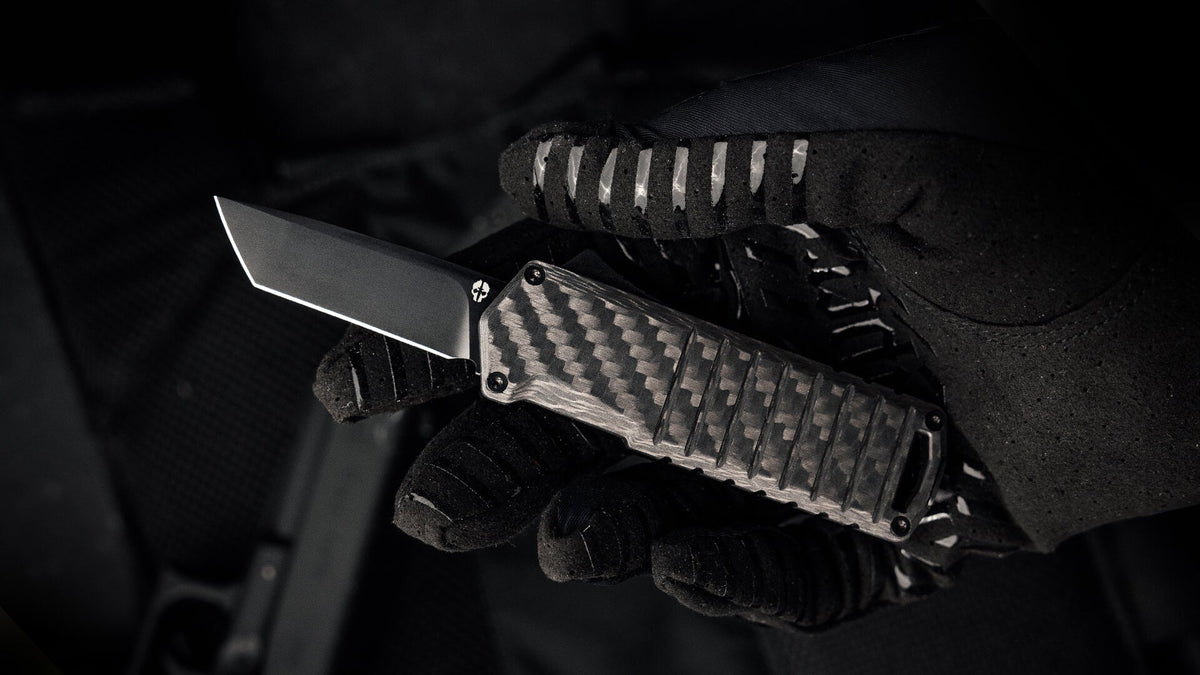
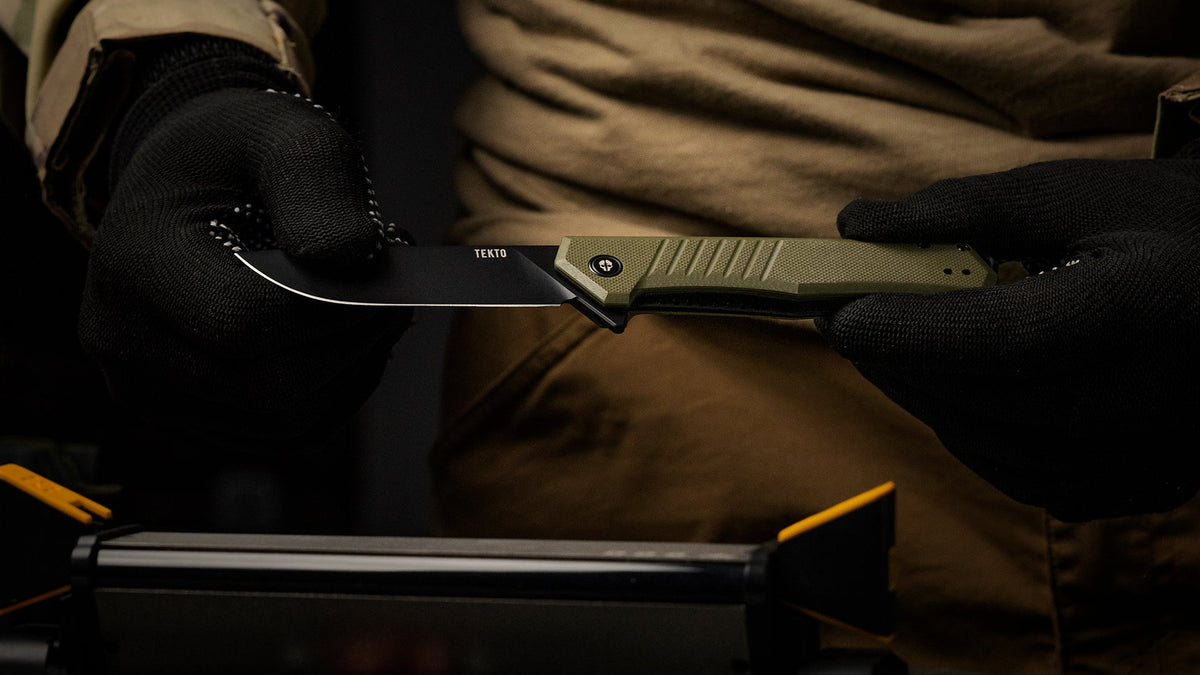
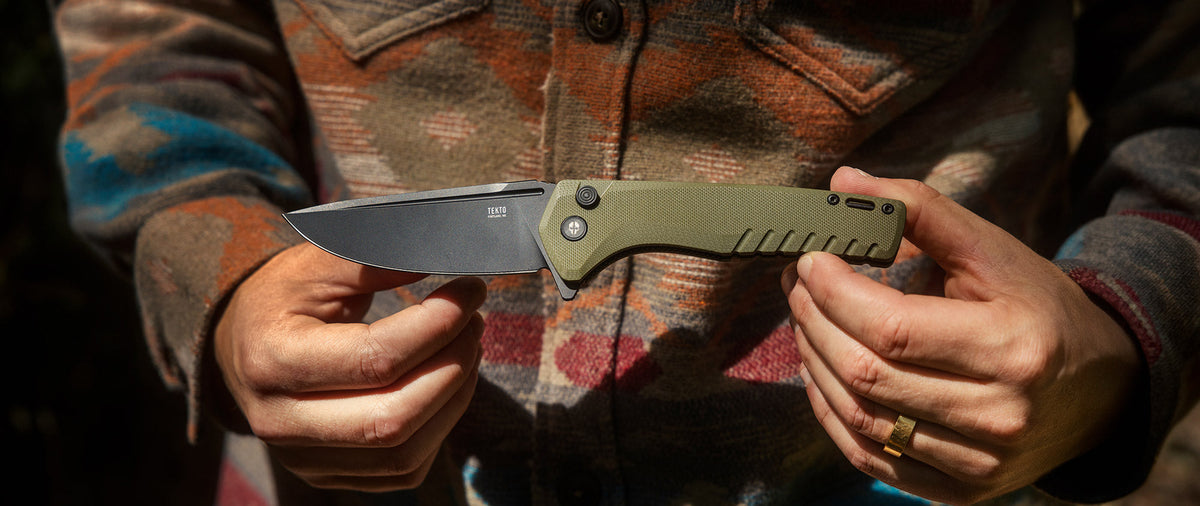
Two folders, the fixed blade and the everyday OTF: each one cleans, oils and stores the same way.


People Are Asking
How often should I oil a folding knife?
A drop on the pivot after every cleaning, and a thin film on the blade whenever the knife will sit unused for more than a week or two. A knife carried daily in a dry pocket needs oil about once a month.
What oil should I use on a knife?
Any light machine oil or gun oil works on the pivot and the blade. If the knife will touch food, use food-grade mineral oil. Keep oil off wood handles. Use a wax instead. G10, carbon fiber and aluminum handles need nothing.
How do I get rust off a knife?
Wash the blade, then rub light rust with a paste of baking soda and water on a soft brush or very fine steel wool, working along the blade rather than across the edge. Heavier rust comes off with a penetrating oil or a metal polish. Rinse, dry completely, pivot and clip included, and oil the blade.
How do I know when the edge needs sharpening?
When it slides on a sheet of paper instead of slicing it, or when you find yourself pressing harder than you used to. A few passes on a ceramic rod at the 20-degree factory angle fixes it. If that no longer helps, the edge needs a stone.
Can I store a knife in its sheath?
Carry it in the sheath, store it out of it. Leather holds moisture and the tanning chemicals in it can stain steel, so a knife left sheathed for months can come out spotted. Store the blade oiled, in a breathable sleeve or a dry drawer.
What is the best way to store a knife collection?
Dry and oiled first, then by size and how much of it you want to see. A sealable hard case with a desiccant pack for the strongest protection, a knife roll for a dozen folders in a drawer or a bag, a glass display case out of direct sun for the pieces you want to look at, and a pouch for the one knife you carry.