



You are stranded, your phone is dead, and you cannot navigate your way out. It is a serious situation, and if you packed a knife, it is a much better one. Here are seven jobs a knife does on the way home, from shelter and fire to the food you find along the way, and which knife to pack so it can do all of them.
Building Shelter
Shelter comes first. A knife cuts the poles and withies for a frame, notches them so they hold, trims cord, and cuts boughs or grass for a floor that keeps you off the cold ground. None of that is possible with bare hands in the time you have before dark.
Finding and Preparing Food
If the stay runs long, the knife is how you eat: dressing fish or small game, cutting wild plants, splitting a nut. Keep the edge clean between food and everything else, and keep it sharp. A dull knife wastes the food you worked for. Most of what the woods offer is hand work, and the rest is knife work: trimming, cutting, husking. Berries are the easiest harvest, and the knife earns its place on the thorny canes, cutting away the branches that block the ripe fruit rather than reaching through them. Fiddleheads, the coiled spring fronds of the ostrich fern, come off with a clean slice an inch above the ground, and only the ostrich fern's are the ones to eat, cooked thoroughly, with no more than two or three taken from any crown so the plant keeps growing. Wild walnuts hide inside a tough green husk that the knife scores around and peels back, and that stains everything it touches. The whole dandelion is edible, flowers to roots, and the knife cuts the leaves close to the ground while a stick or a trowel loosens the root. Let the knife cut, not dig, because digging with the tip is how tips break and how grit gets into a pivot.
Mushrooms are where foraging stops being a pleasure. Many wild mushrooms are poisonous, several deadly ones look like edible species, and a knife is no help in telling them apart. Do not eat a wild mushroom without real training and a confirmed identification from an expert or a reliable regional field guide, never a phone app alone. When in doubt, leave it out.
Making Tools
In a survival situation you make what you did not pack. A knife whittles tent stakes, a fishing spear, a digging stick, a spoon. It shapes a bow drill, sharpens a walking staff and splits a branch into a pot hook. Every tool you make saves the knife from a job it should not do.
First Aid
A knife cuts bandages from a shirt, trims a splint to length, opens a package and removes a splinter or a thorn. Clean the blade first, with water and then with flame if you have it. With basic first aid knowledge, the knife is the tool that turns what you have into what you need.
Signaling for Help
A bright blade flashes sunlight a long way. Tilt it to throw the reflection toward an aircraft or a ridge. A knife also cuts the brush for a signal fire and carves an arrow or an SOS into a log where searchers will pass.
Starting a Fire
A knife makes fire possible. Carve thin curls into a dry stick to make a feather stick, split damp wood to reach the dry core, and scrape fine tinder from bark. If the spine has a sharp, square edge, it will throw sparks from a ferro rod, which is why the rod belongs in the same pocket as the knife.
Finding the Way
A knife will not replace a compass, but it helps you not get more lost. Mark your trail with small blazes or carved arrows on the way out from a known point, so you can get back to it, and scratch a rough map of the area into bark or a flat rock while the landmarks are fresh. Moving in a straight line and being able to return to where you started is most of wilderness navigation.
Which Knife to Pack
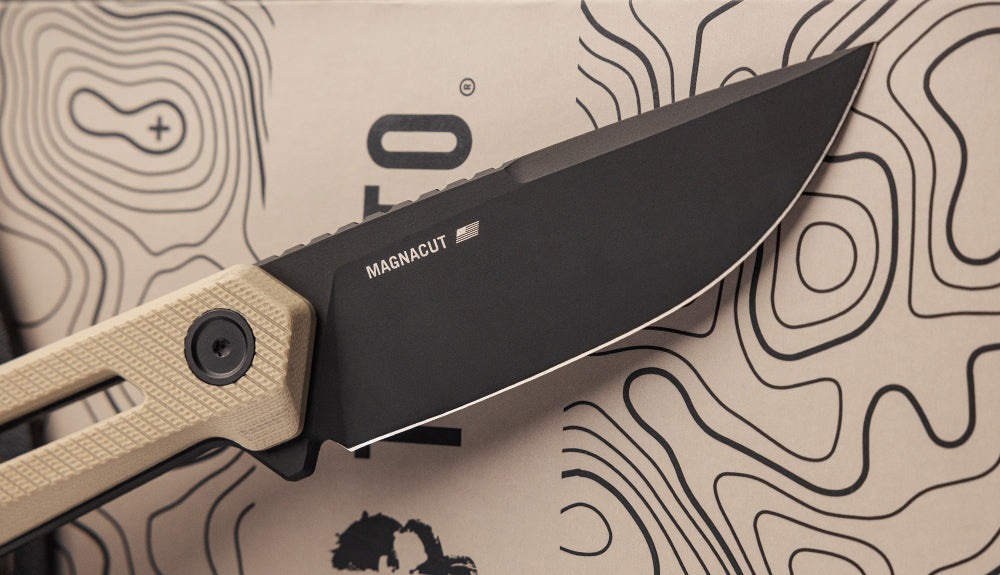
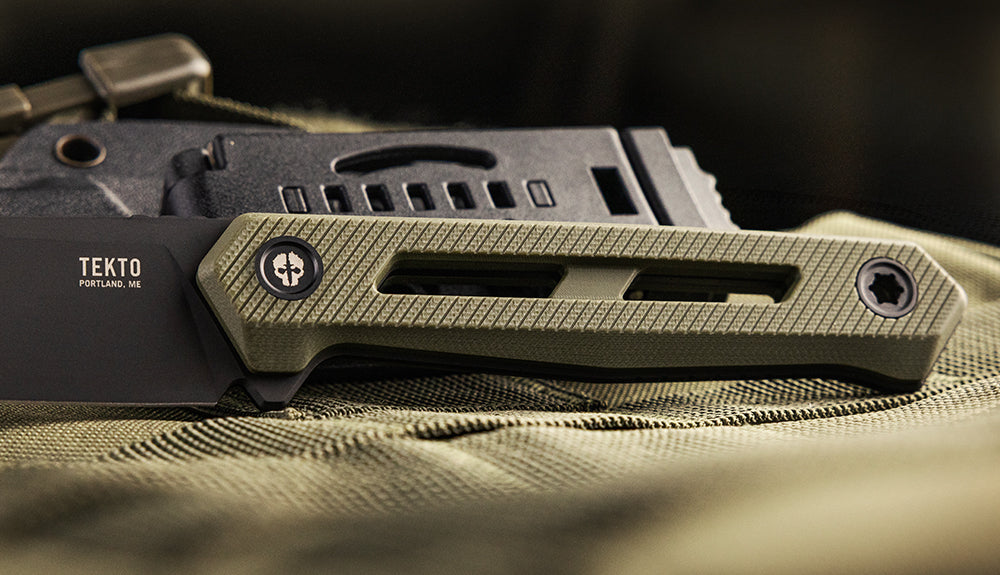
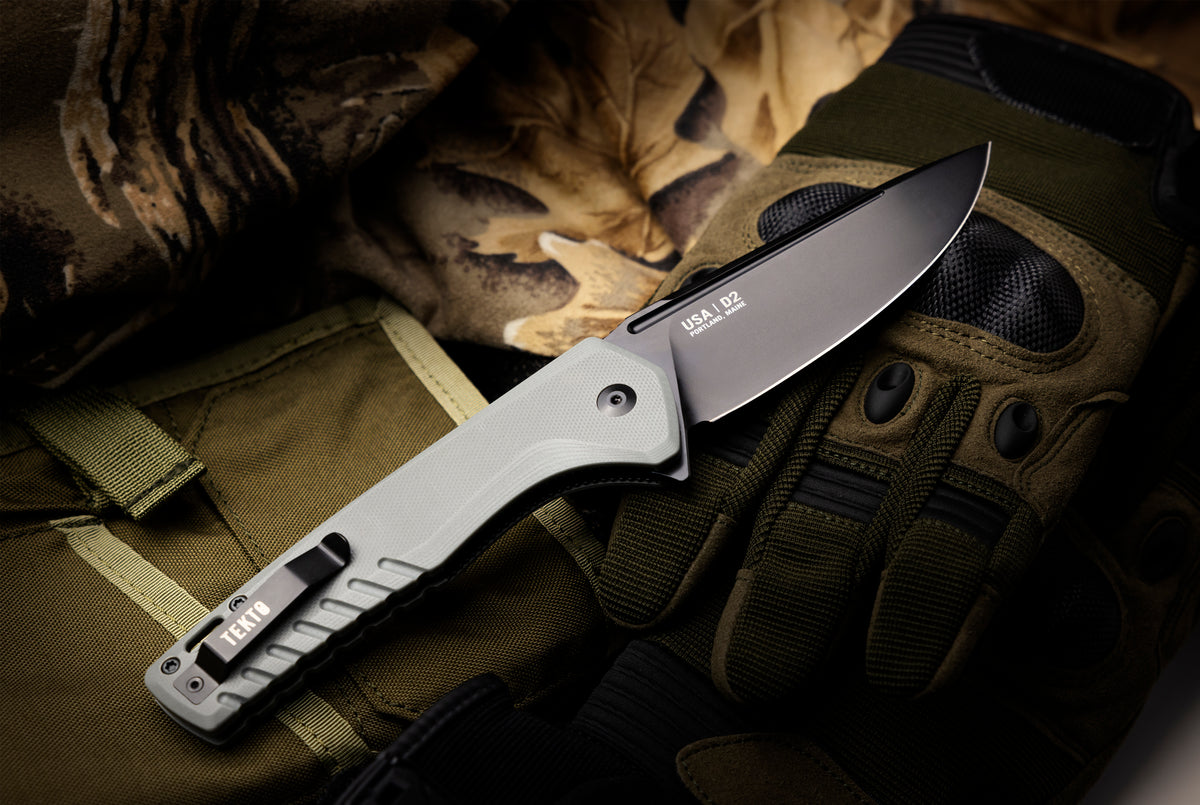
Shelter, food, tools, first aid, signals, fire and the trail: one knife does all seven, if it is the right knife. For the hard jobs a fixed blade wins, and the X1 Atlas, a 3.30-inch MagnaCut blade in a Kydex sheath, is the one we make for it. Carry a folder such as the F1 Alpha in the pocket as well. It is the knife you will reach for ten times a day, and the forager's tool, because it is small, sharp, closes between uses and is there when both hands are already in the brambles. Our camping, bushcraft and survival guide explains the sizes, and the maintenance guide covers the two minutes after a morning of sap and berry juice that keep the knife sharp for the next trip. On your next trip, pack a knife. Your way home may depend on it.
The Knife to Pack
The X1 Atlas is the fixed blade for the hard jobs. A folder in the pocket backs it up.


People Are Asking
What is the best knife to carry for survival?
A fixed blade of 3.5 to 6 inches with a full-length tang, in a sheath you can reach. It batons, carves and pries where a folder cannot. The X1 Atlas is the TEKTO knife for that. Carry a folder as well, because the folder is the one you will use most.
Can I start a fire with a knife?
The knife makes the fire possible: it feathers dry sticks into tinder, splits damp wood to the dry core, and scrapes bark into fluff. A square spine will throw sparks from a ferro rod. It will not make fire by itself, so carry the rod or a lighter.
Which wild foods are safe to forage with a knife?
Berries, fiddleheads from the ostrich fern, walnuts and dandelions are the common ones, and the knife trims, slices and husks them. Mushrooms are the exception: several deadly species look like edible ones, and no knife tells them apart. Leave mushrooms to people with real training and a confirmed identification.
Should I carve trail markers into trees?
Only when you are lost and need to find your way back to a known point. In normal travel it damages trees and is illegal in many parks. Blazes, stacked rocks and snapped twigs do the job with less harm.